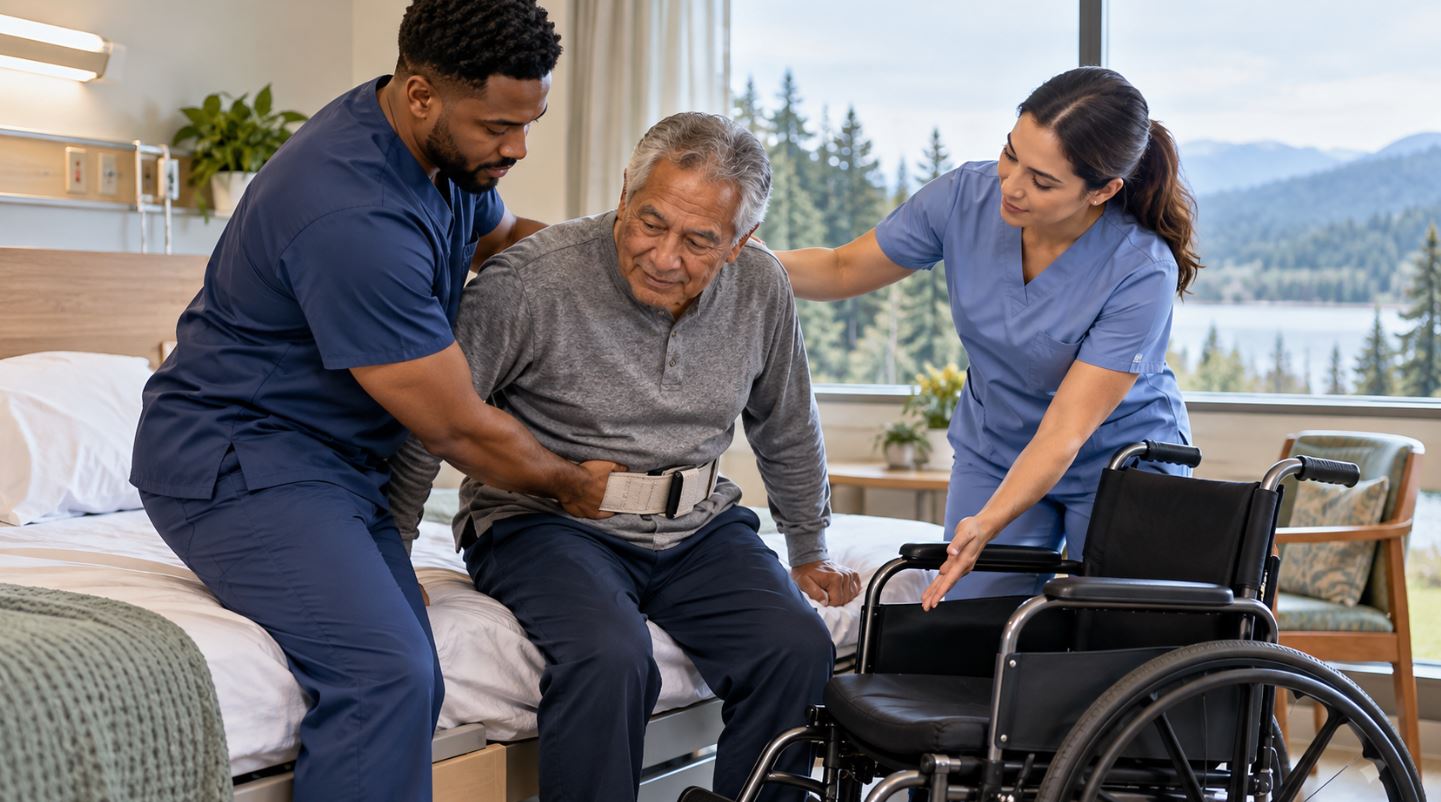
Moving a patient from a bed to a wheelchair, assisting someone to the bathroom, or helping a resident stand may seem like routine responsibilities. However, these everyday activities can become dangerous when proper patient transfer techniques are overlooked.
For Certified Nursing Assistants (CNAs) and caregivers in Oregon, safe patient handling is more than a workplace responsibility. It is an essential part of protecting vulnerable patients, preventing injuries, and preserving dignity.
A single rushed movement, poorly positioned wheelchair, or inappropriate lifting technique can put both the patient and healthcare professional at risk.
At Dino Health Staffing, we believe that quality patient care begins with informed, prepared, and compassionate healthcare professionals. Understanding common patient transfer mistakes is an important step toward creating safer care environments.
Why Patient Transfer Safety Matters in Oregon
Patient falls and healthcare worker injuries remain serious concerns across the United States.
According to the Centers for Disease Control and Prevention (CDC), more than 14 million Americans aged 65 and older report falling annually, representing approximately one in four older adults.
Oregon faces particularly significant challenges. The Oregon Health Authority’s State Health Assessment reported that in 2023:
- Oregon recorded 127 fall-related deaths per 100,000 adults aged 65 and older.
- The corresponding national rate was 89 per 100,000.
Healthcare workers also face considerable physical risks. According to the Occupational Safety and Health Administration (OSHA), nursing assistants experienced 166.3 musculoskeletal disorder cases involving days away from work per 10,000 workers in 2017, more than five times the all-industry average of 30.5.
Although these statistics cover falls and occupational injuries broadly, they demonstrate why safe mobility assistance and proper patient handling deserve consistent attention.
10 Common Patient Transfer Mistakes CNAs and Caregivers Should Avoid
1. Failing to Review the Patient’s Mobility Needs
One of the most dangerous assumptions caregivers make is believing that a patient who could stand yesterday can safely perform the same movement today.
A patient’s mobility may change because of illness, weakness, medication effects, surgery, fatigue, or deteriorating health.
How to avoid this mistake:
Review the patient’s current care plan and transfer instructions before providing assistance. Pay attention to weight-bearing restrictions, prescribed equipment, and the required number of caregivers.
If the patient’s condition appears different from the documented care plan, seek guidance from the supervising nurse before proceeding.
2. Attempting to Lift Patients Without Appropriate Equipment
Relying entirely on physical strength is a common cause of unsafe patient handling.
Manually lifting someone who cannot support their weight can strain the caregiver’s back, shoulders, and arms while increasing the likelihood of an uncontrolled transfer.
OSHA recommends minimizing manual resident lifting and eliminating it whenever feasible.
Safer approach: Use the transfer equipment specified in the patient’s care plan. Depending on individual needs, this may include a full-body mechanical lift, sit-to-stand device, or friction-reducing transfer aid.
Never substitute personal strength for an appropriate lifting device simply because equipment is inconvenient to obtain.
3. Using a Gait Belt Incorrectly
Gait belts can support safer movement when used appropriately, but they are not suitable for every patient.
A common mistake is treating a gait belt as a lifting harness for someone who cannot bear their own weight.
According to OSHA’s nursing home ergonomics guidelines, gait belts are intended for selected patients who can participate in movement and support some of their weight. They should not be used to lift residents.
Before using a gait belt, confirm that it is appropriate for the patient’s physical condition, mobility abilities, and care plan.
4. Transferring Patients Without Enough Assistance
Trying to complete a transfer alone when additional staff are required can create unnecessary risks.
Some patients need two or more trained caregivers, depending on their mobility limitations, medical condition, and the equipment being used.
How to prevent this: Follow the documented assistance requirements, request help when needed, and agree on each caregiver’s responsibilities before beginning.
Clear coordination helps prevent sudden, unsupported movements and confusion during transfers.
5. Neglecting Wheelchair and Equipment Safety Checks
Even experienced caregivers can overlook basic equipment preparation.
A wheelchair that moves unexpectedly, an incorrectly positioned footrest, or a poorly fitted lifting sling may create serious hazards.
Before transferring a patient:
- Inspect relevant equipment for damage or defects.
- Position the wheelchair or transfer surface appropriately.
- Secure brakes where required by the transfer procedure.
- Move footrests and other obstructions when appropriate.
- Verify lift and sling compatibility, attachments, and weight limits.
Always follow the equipment manufacturer’s instructions and the facility’s approved procedures.
6. Ignoring Environmental Hazards
A cluttered room can turn an otherwise manageable transfer into a dangerous situation.
Wet floors, electrical cables, misplaced walking aids, and poorly positioned furniture can interfere with safe patient movement.
Healthcare professionals should check the surrounding environment before beginning a transfer.
Ensure the route is unobstructed, the floor is dry, and the patient has appropriate footwear when standing or walking.
A safe transfer begins before the patient moves.
7. Pulling Patients by Their Arms or Using Poor Body Mechanics
Pulling a patient by the arms or under the shoulders can cause discomfort, joint injuries, or loss of balance.
Similarly, twisting the back, reaching excessively, or attempting to catch a patient’s full body weight can injure caregivers.
Instead, use approved patient handling equipment and techniques taught during practical training.
Adjust the working environment when appropriate and avoid forceful movements that place unnecessary stress on the patient or caregiver.
Proper body positioning is important, but it does not make unsafe manual lifting acceptable.
8. Failing to Communicate Before the Transfer
Patients should understand what is happening before they are moved.
Beginning a transfer without explaining the process may cause fear, resistance, or unexpected movements, especially among patients experiencing confusion or cognitive impairment.
Explain the planned movement in simple language, allow time for questions, and encourage appropriate participation.
For patients who need additional communication support, follow their individualized care instructions.
Respectful communication improves cooperation while protecting patient dignity.
9. Ignoring Signs of Discomfort or Instability
A patient may become dizzy, weak, unusually confused, or uncomfortable during a transfer.
Continuing despite these warning signs can increase the risk of a fall or injury.
Never prioritize completing the transfer over the patient’s immediate safety.
If concerning symptoms develop, stop the movement safely, obtain assistance, and notify the supervising nurse according to facility procedures.
Unexpected changes in mobility should prompt appropriate reassessment before further transfers.
10. Failing to Report Transfer Incidents and Near Misses
Not every unsafe transfer results in an obvious injury.
A wheelchair moving unexpectedly, a patient nearly losing balance, or equipment malfunctioning can indicate a safety problem that requires attention.
Caregivers should report incidents and near misses promptly, following workplace policies.
If a patient falls, obtain appropriate clinical assistance and ensure the patient is assessed before attempting to move them, except where immediate danger requires emergency action.
Accurate reporting helps healthcare teams identify hazards, review care plans, and prevent similar incidents.
Building a Stronger Culture of Patient Transfer Safety in Oregon
Safe patient transfers depend on more than individual caregiver experience. Healthcare facilities must provide appropriate equipment, practical training, clear care plans, and adequate staffing support.
The Oregon State Board of Nursing’s nursing assistant curriculum includes training in safe transfers, mechanical lifts, gait belts, slide boards, and friction-reducing devices.
Additionally, Oregon OSHA provides safe patient handling training resources that healthcare organizations can use to strengthen their existing programs.
For hospitals, skilled nursing facilities, assisted living communities, and home healthcare providers across Portland and surrounding Oregon communities, these resources offer valuable opportunities to reinforce safer practices.
Training should be supported by regular competency checks, appropriate supervision, and consistent communication whenever a patient’s mobility needs change.
Frequently Asked Questions About Safe Patient Transfers
Can a CNA transfer a patient alone?
It depends on the patient’s care plan, mobility abilities, equipment requirements, and workplace policies. Some patients can be assisted by one trained caregiver, while others require additional staff or mechanical lifting equipment.
Should every patient transfer involve a gait belt?
No. Gait belts are appropriate only for selected patients and situations. Patients who cannot safely bear weight or participate in the movement may need different equipment.
What should caregivers do when a transfer feels unsafe?
Stop before proceeding, ensure the patient’s immediate safety, and seek assistance from the supervising nurse or appropriate clinical team. Never improvise a transfer beyond your training or the patient’s documented care requirements.
Supporting Safer Healthcare Through Dino Health Staffing
Every safe transfer represents something meaningful: a patient protected from preventable harm and a healthcare professional equipped to provide quality care.
At Dino Health Staffing, our nurse-led approach reflects our commitment to connecting qualified healthcare professionals with facilities that value compassion, reliability, and patient-centered care.
We support healthcare organizations throughout Portland and surrounding Oregon communities by connecting them with qualified CNAs, nurses, and caregivers.
Whether you are a healthcare professional seeking new opportunities or a facility looking for dependable staffing support, we are here to help.
Because safer patient care begins with the right people, the right preparation, and the right support.
Dino Health is dedicated to connecting healthcare professionals with top-tier job opportunities while ensuring healthcare facilities find the best talent. We are committed to enhancing the healthcare industry by prioritizing work-life balance, career growth, and professional well-being. Through expert insights, industry news, and career resources, we empower nurses, doctors, and allied health professionals to thrive in their careers. Connect with Us on Facebook