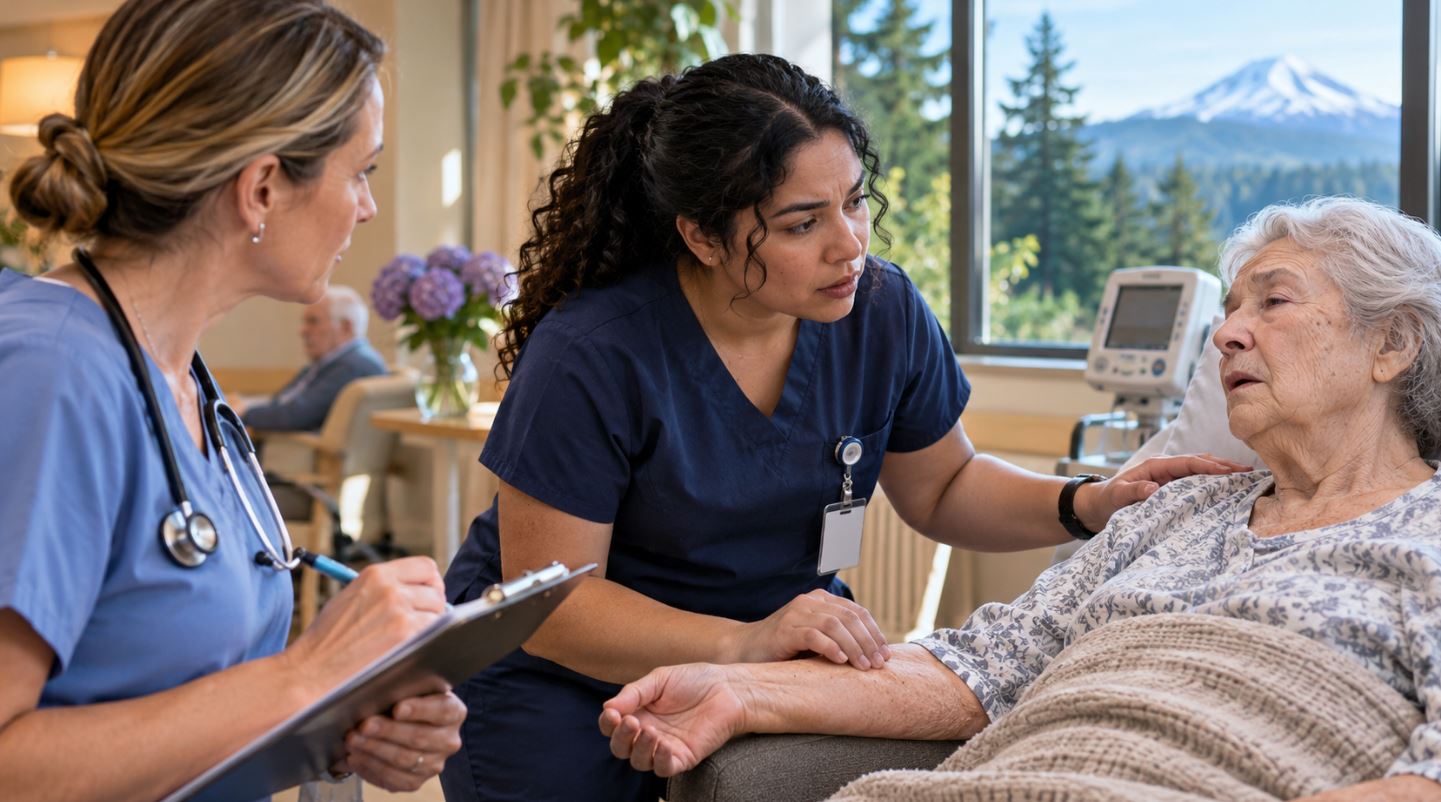
Certified Nursing Assistants (CNAs) are often the first healthcare professionals to notice when a patient’s condition begins to change. Whether assisting residents in Oregon nursing homes, supporting patients in hospitals, or providing care in long-term care facilities, CNAs play a crucial role in identifying potential health concerns before they become serious emergencies.
A patient who suddenly becomes confused, refuses meals, struggles to breathe, or experiences unusual weakness may be showing early warning signs of deterioration.
Recognizing these changes and communicating them promptly can help licensed nurses initiate timely assessments and appropriate care.
For CNAs working throughout Portland and Oregon, understanding what to observe, when to report, and how to communicate concerns is an essential patient safety skill.
Why Early Recognition of Patient Deterioration Matters
Patient deterioration occurs when someone’s physical, mental, or overall health condition worsens. Changes may develop gradually over several hours or appear suddenly.
Early recognition matters because some life-threatening conditions, including sepsis and stroke, require urgent medical attention.
According to the Centers for Disease Control and Prevention (CDC):
- Approximately 1.7 million adults develop sepsis in the United States annually.
- At least 350,000 adults who develop sepsis die during hospitalization or are discharged to hospice each year.
These figures highlight the importance of recognizing concerning symptoms and escalating them quickly.
CNAs do not diagnose medical conditions. However, their regular interactions with patients create valuable opportunities to recognize changes that require nursing attention.
7 Early Warning Signs of Patient Deterioration Every CNA Should Know
1. Changes in Breathing Patterns
Breathing difficulties can indicate serious health problems requiring immediate attention.
Warning signs include:
- Rapid, shallow, or unusually slow breathing.
- New shortness of breath or difficulty speaking comfortably.
- Unusual breathing sounds.
- Significant changes in oxygen saturation readings.
- Blue, gray, or otherwise unusual changes in lip or skin coloration.
What CNAs should do: Immediately notify the licensed nurse about new breathing difficulties. Severe respiratory distress requires activation of the facility’s emergency response procedures.
2. Sudden Confusion or Changes in Mental Status
A resident who normally recognizes caregivers but suddenly becomes disoriented may be experiencing an important change in health.
Watch for:
- New confusion or unusual forgetfulness.
- Difficulty staying awake.
- Sudden agitation or restlessness.
- Unusual withdrawal or reduced responsiveness.
- Difficulty following familiar instructions.
These symptoms may be associated with infections, medication effects, dehydration, or other medical concerns.
Never assume that sudden confusion is simply part of aging or dementia.
What CNAs should do: Report new mental status changes promptly, explaining how the person’s current behavior differs from their usual condition.
3. Unusual Vital Signs
Vital signs provide important information about a patient’s condition.
CNAs should pay attention to changes in:
- Body temperature.
- Heart rate.
- Respiratory rate.
- Blood pressure.
- Oxygen saturation, when monitored.
For example, a patient who normally has stable measurements but develops a rapid pulse and fever may need further evaluation.
Oregon CNAs may measure and record specified vital signs under the direction and supervision of licensed nurses.
What CNAs should do: Report abnormal readings and significant changes from the patient’s baseline. Follow facility-specific reporting thresholds rather than making independent clinical judgments.
4. Signs of Infection or Possible Sepsis
Infections can become particularly dangerous among older adults and people with underlying health conditions.
The CDC identifies several possible warning signs of sepsis, including:
- Fever, shivering, or feeling unusually cold.
- Confusion or disorientation.
- Clammy or sweaty skin.
- High heart rate or weak pulse.
- Shortness of breath.
- Extreme pain or discomfort.
Sepsis is a life-threatening medical emergency.
What CNAs should do: Promptly report concerning combinations of symptoms, especially when a patient has a known or suspected infection. Clinical diagnosis and treatment decisions belong to qualified healthcare providers.
5. Sudden Weakness, Balance Problems, or Falls
Changes in mobility can signal underlying health problems and increase the risk of injury.
According to the CDC’s older adult fall prevention data, more than 14 million Americans aged 65 and older, approximately one in four, report falling each year.
CNAs should watch for:
- New difficulty walking or transferring.
- Sudden dizziness or loss of balance.
- Unusual weakness or difficulty standing.
- Unexpected falls or near-falls.
Sudden facial drooping, one-sided weakness, speech difficulty, vision changes, or loss of coordination may indicate a stroke.
What CNAs should do: Report new mobility changes and falls immediately. Suspected stroke symptoms require emergency activation, including calling 911 as appropriate, without waiting for routine reporting.
6. Changes in Eating, Drinking, or Urination
Changes in daily routines sometimes provide early clues that a patient is becoming unwell.
Important observations include:
- Suddenly refusing meals or fluids.
- Unusually reduced fluid intake.
- Noticeably decreased urine output.
- New difficulty swallowing.
- Repeated vomiting or diarrhea.
- New urinary discomfort or incontinence.
These changes may accompany dehydration, infection, or other conditions requiring assessment.
What CNAs should do: Record relevant intake and output information according to facility procedures and promptly communicate significant changes to the nurse.
7. New Pain, Skin Changes, or Unexplained Bleeding
Physical discomfort and visible changes should never be overlooked.
Watch for:
- Sudden or worsening pain.
- New swelling or unusual skin discoloration.
- Skin breakdown or concerning changes around wounds.
- Unexplained bruising or bleeding.
- Chest discomfort, particularly when accompanied by breathing difficulty or sweating.
What CNAs should do: Report observations without attempting to diagnose the cause. Severe chest pain, uncontrolled bleeding, or other immediately life-threatening symptoms require emergency response.
How CNAs Can Recognize Changes From a Patient’s Normal Condition
Recognizing deterioration begins with knowing what is normal for each patient.
For example, a resident who usually participates in conversations but becomes unusually quiet may be showing an important change.
A patient who regularly walks independently but suddenly needs substantial assistance may require nursing evaluation.
CNAs can strengthen their observation skills by:
- Reviewing the patient’s care plan and shift handover information.
- Learning the individual’s usual mobility, behavior, and communication patterns.
- Paying attention to patient and family concerns.
- Comparing current observations with previous measurements.
- Reporting unexplained changes rather than waiting for symptoms to become severe.
A small change from a patient’s normal condition may be more meaningful than an isolated measurement.
How to Report Patient Deterioration Using SBAR Communication
Recognizing a concerning change is only the first step. Clear communication helps the healthcare team respond effectively.
The Agency for Healthcare Research and Quality (AHRQ) recommends SBAR, a structured communication framework.
SBAR stands for:
- S — Situation: Explain what is happening and why you are concerned.
- B — Background: Describe the patient’s usual condition and relevant known information.
- A — Assessment: Provide your observations and measurements. The licensed nurse is responsible for clinical assessment.
- R — Recommendation or Request: Clearly request nursing evaluation or guidance.
Example of an Effective CNA Report
Consider a hypothetical resident who normally walks independently and participates in conversations.
A CNA notices that the resident is suddenly confused, breathing faster than usual, and unable to stand without assistance.
An appropriate report might be:
“I am concerned about a sudden change in Mrs. D’s condition. She normally walks and communicates independently, but she is now confused, breathing unusually fast, and cannot stand without help. I noticed these changes at approximately 8:15 a.m. Could you assess her immediately?”
This report communicates specific observations, identifies the change from baseline, and requests prompt attention without making a diagnosis.
What Should CNAs Do When a Patient’s Condition Worsens?
When deterioration is suspected, CNAs should follow a clear response process.
- Recognize the change: Identify unusual physical, behavioral, or vital sign findings.
- Notify the licensed nurse promptly: Communicate urgent concerns directly rather than waiting for the next shift.
- Activate emergency procedures when necessary: Follow facility protocols for immediately life-threatening conditions.
- Document accurately: Record observations, measurements, times, and required reporting details.
- Follow up: Confirm the appropriate healthcare professional has received the concern and follow instructions within the CNA’s authorized duties.
If the assigned nurse is unavailable and the concern remains urgent, follow the facility’s escalation procedures.
Understanding CNA Responsibilities Under Oregon Nursing Regulations
Oregon has specific standards governing the responsibilities of Certified Nursing Assistants.
Under Oregon Administrative Rule 851-063-0021, CNAs must:
- Follow the care plan under licensed nurse direction and supervision.
- Report observed changes in a client’s condition to the licensed nurse.
- Record observations, measurements, completed duties, and relevant patient statements.
- Apply workplace safety principles.
These requirements reinforce the importance of observation, communication, and documentation.
CNAs should remain within their authorized scope of practice and never independently diagnose conditions or initiate unauthorized treatments.
How Dino Health Supports Quality Healthcare Staffing in Oregon
Reliable patient care depends on qualified healthcare professionals who understand the importance of observation, communication, and teamwork.
At Dino Health Staffing, we connect CNAs, nurses, medical assistants, and caregivers with healthcare facilities throughout Portland and surrounding Oregon communities.
Our staffing solutions support hospitals, nursing homes, skilled nursing facilities, clinics, and home health organizations seeking capable healthcare professionals.
Whether you are a CNA looking for rewarding career opportunities or a healthcare facility seeking dependable staffing support, Dino Health is committed to connecting the right professionals with the right opportunities.
For healthcare professionals: Explore opportunities and join Dino Health Staffing.
For healthcare facilities: Request qualified healthcare staff.
Final Thoughts
Recognizing and reporting early warning signs of patient deterioration is one of the most valuable contributions CNAs make to healthcare teams.
From noticing changes in breathing and mental status to identifying unusual weakness, pain, or infection symptoms, careful observation can support faster clinical evaluation.
For Oregon CNAs, the goal is straightforward: Know your patients, recognize meaningful changes, communicate concerns promptly, and always prioritize patient safety.
References and Further Reading
- CDC — About Sepsis
- CDC — Older Adult Falls Data
- CDC — Signs and Symptoms of Stroke
- AHRQ — SBAR Communication Tool
- Oregon Secretary of State — CNA Standards and Responsibilities
Educational disclaimer: This article provides general information and does not replace professional medical judgment, facility emergency procedures, or guidance from a licensed nurse.