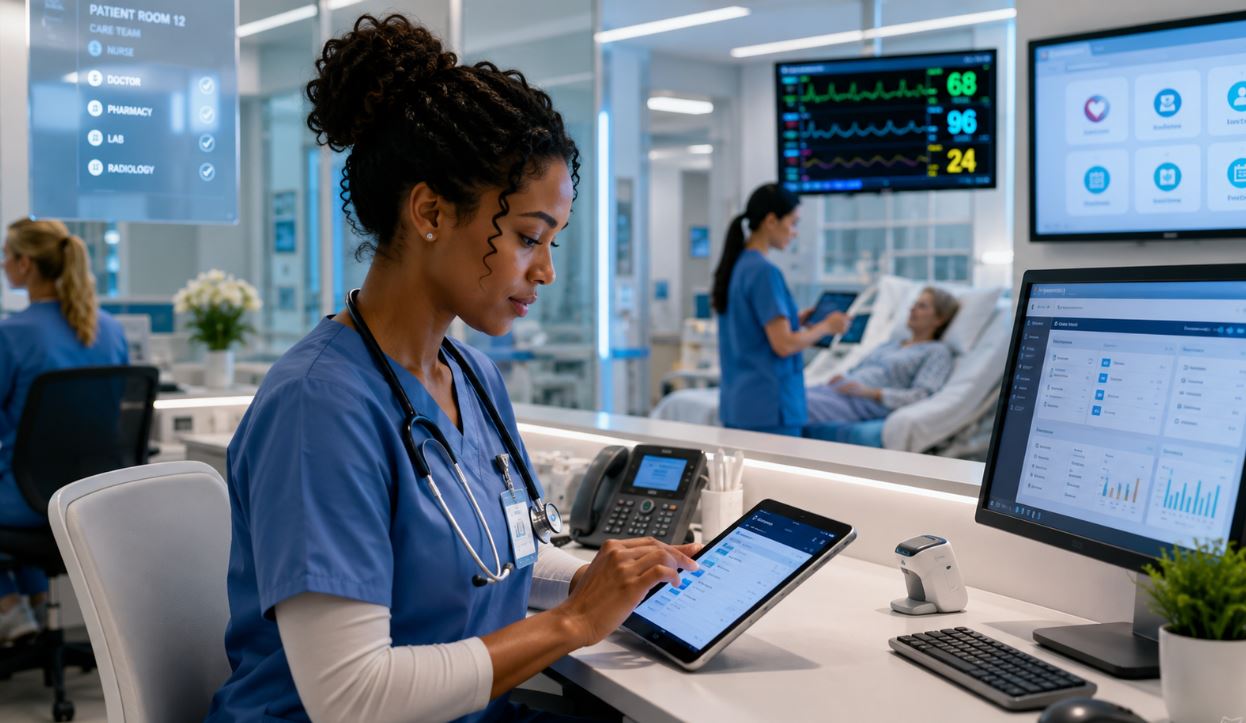
Healthcare is changing faster than ever before, and nurses are at the center of this transformation. From electronic health records and telehealth consultations to artificial intelligence (AI), wearable medical devices, and mobile healthcare applications, technology is reshaping how nurses deliver care every day.
Technology is no longer simply a tool used in hospitals. It has become an essential part of modern nursing practice. It improves communication, supports clinical decision-making, increases patient safety, reduces paperwork, and allows nurses to spend more meaningful time caring for patients.
According to the U.S. Bureau of Labor Statistics (BLS), registered nurse employment is projected to grow 6% between 2022 and 2032, resulting in approximately 193,100 job openings each year. At the same time, healthcare organizations continue investing heavily in digital transformation. According to Grand View Research, the global digital health market was valued at more than $240 billion in 2023 and is projected to continue growing rapidly throughout the decade.
Technology is helping healthcare organizations respond to increasing patient demand, workforce shortages, and the growing need for high-quality, efficient care. For nurses working in hospitals, clinics, home health agencies, long-term care facilities, and community health organizations across Oregon and the United States, technology has become an essential partner in delivering better outcomes.
The Evolution of Nursing in the Digital Age
Nursing has always relied on knowledge, compassion, and critical thinking. Today, technology enhances these strengths instead of replacing them.
Years ago, nurses documented patient information on paper charts, manually calculated medication dosages, and relied heavily on phone calls and handwritten notes to communicate with physicians and other departments.
Today, digital platforms provide instant access to patient histories, laboratory results, medication records, imaging reports, and treatment plans.
Technology has transformed nearly every aspect of nursing practice, allowing healthcare professionals to make faster, more informed decisions while improving coordination among multidisciplinary teams.
Electronic Health Records Improve Patient Care
One of the biggest technological advances in nursing is the widespread use of Electronic Health Records (EHRs).
An Electronic Health Record is a digital version of a patient’s medical history that can be securely shared among authorized healthcare providers.
According to the Office of the National Coordinator for Health Information Technology (ONC), nearly 96% of non-federal acute care hospitals in the United States have adopted certified electronic health records.
Electronic Health Records help nurses:
- Access complete patient histories instantly
- Document care more accurately
- Monitor medications safely
- Review laboratory results in real time
- Reduce duplicate testing
- Improve communication between departments
- Coordinate care across multiple providers
Instead of searching through paper files, nurses can retrieve vital information with just a few clicks, allowing faster treatment decisions.
Barcoded Medication Administration Improves Safety
Medication errors remain a major concern in healthcare.
According to the U.S. Food and Drug Administration (FDA), medication errors harm thousands of patients each year.
Barcoded Medication Administration (BCMA) technology helps reduce these risks.
Before administering medication, nurses scan:
- Their employee identification badge
- The patient’s identification bracelet
- The medication barcode
The system verifies the “Five Rights” of medication administration:
- Right patient
- Right medication
- Right dose
- Right route
- Right time
This technology significantly reduces preventable medication errors while improving patient safety.
Artificial Intelligence Supports Better Clinical Decisions
Artificial Intelligence is becoming an important support tool for nurses.
AI does not replace nursing judgment. Instead, it provides valuable information that helps clinicians make informed decisions.
Healthcare organizations use AI to:
- Identify patients at risk for deterioration
- Predict hospital readmissions
- Detect early signs of sepsis
- Analyze diagnostic images
- Recommend evidence-based interventions
- Improve staffing forecasts
According to McKinsey & Company, AI could create between $200 billion and $360 billion in annual value for healthcare worldwide through improved efficiency and better patient outcomes.
For nurses, AI reduces time spent analyzing data and allows greater focus on patient care.
Telehealth Expands Access to Healthcare
Telehealth has become one of the fastest-growing healthcare technologies.
The Centers for Disease Control and Prevention (CDC) reported a dramatic increase in telehealth utilization following the COVID-19 pandemic, and many healthcare organizations continue offering virtual services today.
Nurses now conduct:
- Virtual patient education
- Follow-up appointments
- Chronic disease monitoring
- Medication counseling
- Mental health support
- Telephone triage
Telehealth increases access to care for:
- Rural communities
- Older adults
- Patients with mobility challenges
- Individuals managing chronic illnesses
For Oregon residents living in remote areas, telehealth helps reduce travel time while improving access to healthcare professionals.
Wearable Technology Improves Patient Monitoring
Wearable health devices continue changing how nurses monitor patient health.
Common wearable devices include:
- Smartwatches
- Heart rhythm monitors
- Blood glucose sensors
- Blood pressure monitors
- Oxygen saturation devices
- Activity trackers
These devices provide continuous health data that can alert healthcare providers to changes before emergencies develop.
According to Statista, the global wearable medical device market continues to expand as patients increasingly adopt remote monitoring technologies.
Continuous monitoring allows nurses to identify health concerns earlier and intervene before conditions worsen.
Smart Infusion Pumps Increase Medication Accuracy
Modern infusion pumps use computerized programming to deliver medications with greater precision.
These devices help prevent:
- Incorrect infusion rates
- Medication overdoses
- Dosage calculation errors
Many smart pumps include drug libraries that automatically alert nurses when entered dosages fall outside safe limits.
This technology improves both patient safety and nursing confidence.
Mobile Healthcare Technology Saves Time
Mobile devices have become valuable clinical tools.
Healthcare organizations increasingly provide nurses with secure tablets and smartphones that allow them to:
- Access patient records
- Receive physician orders
- Communicate with team members
- Review laboratory results
- Document bedside care
Instead of returning repeatedly to nursing stations, nurses can complete documentation while remaining with patients.
This improves workflow efficiency and enhances patient interaction.
Remote Patient Monitoring Supports Home Healthcare
Home healthcare continues growing throughout Oregon and the United States.
Remote Patient Monitoring (RPM) allows nurses to track patients after discharge using connected devices.
Common conditions monitored include:
- Diabetes
- Heart failure
- Hypertension
- Chronic obstructive pulmonary disease (COPD)
Patients transmit health data electronically, allowing nurses to identify concerns quickly and provide timely interventions.
This reduces unnecessary hospital readmissions while improving patient independence.
Clinical Decision Support Systems Improve Care Quality
Clinical Decision Support Systems (CDSS) provide evidence-based recommendations during patient care.
These systems help nurses by:
- Identifying drug interactions
- Alerting abnormal laboratory values
- Recommending preventive screenings
- Supporting clinical guidelines
- Highlighting allergy concerns
Rather than replacing professional judgment, CDSS strengthens clinical decision-making by providing additional information.
Technology Improves Communication Across Healthcare Teams
Communication is one of the most important components of safe patient care.
Modern communication technologies include:
- Secure messaging platforms
- Electronic physician notifications
- Digital care coordination systems
- Real-time patient dashboards
These tools reduce delays, minimize misunderstandings, and improve collaboration between physicians, nurses, pharmacists, therapists, and specialists.
Technology Helps Reduce Nurse Burnout
Administrative tasks have historically consumed a significant portion of nurses’ time.
Technology helps reduce this burden by automating repetitive activities such as:
- Documentation templates
- Shift scheduling
- Supply inventory
- Appointment reminders
- Medication reconciliation
According to the American Nurses Foundation, reducing administrative workload is one of the most effective strategies for improving nurse wellbeing.
More efficient workflows allow nurses to spend more time delivering direct patient care.
Simulation Technology Improves Nursing Education
Simulation laboratories have transformed nursing education.
High-fidelity patient simulators allow students and experienced nurses to practice:
- Emergency response
- Cardiac arrest management
- Medication administration
- Trauma care
- Pediatric emergencies
Simulation creates realistic clinical experiences without placing patients at risk.
Many healthcare organizations also use simulation to train staff on new technologies and clinical procedures.
Robotics Support Modern Nursing Practice
Healthcare robotics continues expanding.
Robots now assist with:
- Medication delivery
- Supply transportation
- Surgical assistance
- Disinfection
- Rehabilitation therapy
Rather than replacing nurses, robotics reduces physically demanding tasks and allows nurses to concentrate on patient care.
Cybersecurity Protects Patient Information
As healthcare becomes increasingly digital, protecting patient information remains a top priority.
Healthcare organizations invest heavily in cybersecurity measures including:
- Multi-factor authentication
- Data encryption
- Secure cloud storage
- Staff cybersecurity training
- Continuous system monitoring
Protecting confidential health information strengthens patient trust while meeting federal privacy requirements under the Health Insurance Portability and Accountability Act (HIPAA).
Technology Creates New Nursing Career Opportunities
Digital transformation has expanded career options for nurses.
Emerging specialties include:
- Nursing informatics
- Telehealth nursing
- Clinical documentation improvement
- Healthcare data analysis
- Quality improvement
- Population health management
- Artificial intelligence implementation
- Electronic health record training
According to the Healthcare Information and Management Systems Society (HIMSS), demand for nursing informatics professionals continues to grow as healthcare organizations expand digital systems.
Challenges Nurses Face When Adopting Technology
Although technology provides significant benefits, successful implementation requires preparation.
Healthcare organizations must invest in:
- Staff training
- Ongoing education
- Technical support
- User-friendly systems
- Workflow optimization
Technology should simplify nursing practice rather than create additional complexity.
Facilities that provide continuous education achieve higher adoption rates and greater employee satisfaction.
The Future of Nursing Technology
Healthcare technology continues advancing rapidly.
Innovations expected to become more common include:
- Artificial intelligence assistants
- Predictive analytics
- Voice recognition documentation
- Virtual reality training
- Smart hospital rooms
- Internet of Medical Things (IoMT)
- Digital therapeutics
- Robotics-assisted patient care
These technologies will continue improving efficiency while supporting better patient outcomes.
How Healthcare Staffing Agencies Help Nurses Adapt to Technology
Healthcare staffing agencies play an important role in preparing nurses for technology-driven workplaces.
Agencies support professionals by:
- Matching nurses with modern healthcare facilities
- Offering orientation to digital systems
- Providing continuing education opportunities
- Connecting clinicians with facilities using advanced technologies
Nurses who gain experience with multiple healthcare systems become highly adaptable professionals capable of succeeding in diverse clinical environments.
Conclusion
Technology is transforming the daily work of nurses in remarkable ways. Electronic health records, artificial intelligence, telehealth, wearable devices, smart infusion pumps, mobile healthcare applications, simulation training, and remote patient monitoring are making nursing more efficient, accurate, and patient-centered.
While compassion, critical thinking, and clinical expertise remain the foundation of nursing, technology strengthens these qualities by providing nurses with better information, improved communication tools, and safer workflows.
As healthcare continues evolving across Oregon and the United States, nurses who embrace technological innovation will be better prepared to deliver exceptional patient care, expand their career opportunities, and contribute to stronger healthcare systems.
The future of nursing is not about replacing human care with technology. It is about using technology to empower nurses to provide safer, smarter, and more compassionate care than ever before.
Dino Health is dedicated to connecting healthcare professionals with top-tier job opportunities while ensuring healthcare facilities find the best talent. We are committed to enhancing the healthcare industry by prioritizing work-life balance, career growth, and professional well-being. Through expert insights, industry news, and career resources, we empower nurses, doctors, and allied health professionals to thrive in their careers. Connect with Us on Facebook