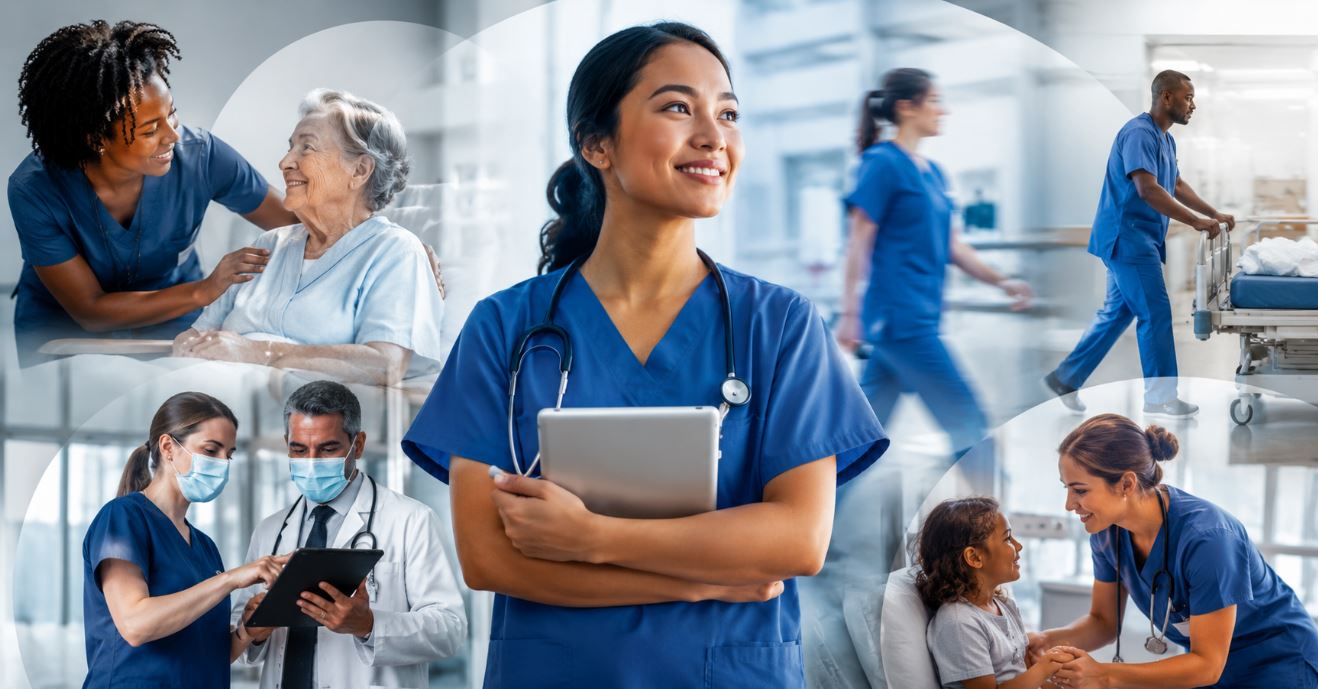
Healthcare is changing faster than ever. New technologies, changing patient needs, workforce shortages, new care models, and rising demand for healthcare services are transforming the way professionals work. In this environment, adaptability has become one of the most valuable skills in healthcare.
Being clinically competent is essential. Having the right education and credentials is essential. Experience matters. Communication matters. However, healthcare professionals who can adapt to new situations, learn new skills, work in different environments, and respond calmly to change are becoming increasingly valuable to healthcare organizations.
The need for adaptable healthcare professionals is supported by strong workforce trends. The U.S. Bureau of Labor Statistics projects that employment in healthcare and social assistance will grow 8.4% between 2024 and 2034, making it the fastest-growing major industry sector during that period. Healthcare occupations are projected to have approximately 1.9 million openings every year, on average, because of employment growth and the need to replace workers who leave their occupations.
The demand is not limited to the United States. The World Health Organization currently projects a global shortage of approximately 11 million health workers by 2030.
These numbers point to an important reality: healthcare organizations need more qualified professionals, but they also need professionals who can perform effectively in an industry that continues to evolve.
What Does Adaptability Mean in Healthcare?
Adaptability in healthcare means being able to respond effectively when circumstances change.
A nurse may begin a shift expecting to work in one department and later need to support another unit. A healthcare facility may introduce a new electronic health record system. A patient population may change. Staffing levels may suddenly decrease. A new infection-control procedure may be introduced. A healthcare professional may need to learn new equipment, technology, or clinical procedures.
An adaptable professional does not simply tolerate these changes. We learn how to work effectively within them.
Adaptability includes several important abilities:
- Learning new skills quickly
- Adjusting to different clinical environments
- Remaining calm under pressure
- Accepting new technology
- Working with different teams
- Managing changing patient needs
- Communicating effectively during uncertainty
- Accepting constructive feedback
- Solving unfamiliar problems
- Continuing professional development
These abilities are particularly important in nursing and healthcare staffing because professionals may work with different facilities, teams, patient populations, and workplace systems.
Why Adaptability Matters More Than Ever in Healthcare
Healthcare has never been static, but the speed of change has increased considerably.
The U.S. healthcare workforce is being affected by demographic changes, technological development, new models of care, workforce shortages, and increasing demand for services.
The Bureau of Labor Statistics reports that healthcare and social assistance is projected to be the fastest-growing major U.S. industry sector from 2024 to 2034, with employment projected to increase by 8.4%.
At the same time, registered nursing remains one of the country’s largest healthcare occupations. BLS projects approximately 166,100 additional registered nursing jobs between 2024 and 2034, representing 4.9% employment growth. The agency also reports approximately 189,100 annual openings for registered nurses when employment growth and replacement needs are considered.
This growth creates opportunity, but it also creates pressure.
Healthcare facilities need professionals who can contribute immediately and continue developing as their environments change.
Adaptability Helps Nurses Work Across Different Healthcare Settings
One of the clearest examples of adaptability can be found in nursing.
A nurse may work in:
- Hospitals
- Skilled nursing facilities
- Long-term care
- Rehabilitation centers
- Outpatient clinics
- Home health
- Behavioral health
- Community health
- Urgent care
- Specialty facilities
Each environment has different expectations.
A hospital nurse may need to manage rapidly changing patient conditions and complex multidisciplinary teams. A home health nurse may work independently and make decisions within the patient’s home environment. A long-term care nurse may develop long-term relationships with residents while managing multiple chronic conditions.
The clinical foundation may remain the same, but the working environment changes significantly.
Adaptable nurses can transfer their core skills from one setting to another while learning the specific requirements of each facility.
Adaptability and the Growing Role of Technology
Technology is changing healthcare rapidly.
Electronic health records, telehealth platforms, remote monitoring, automated medication systems, artificial intelligence, digital scheduling tools, and other technologies are becoming part of everyday healthcare operations.
The Bureau of Labor Statistics notes that technological advancement is expected to affect employment and productivity across the economy, including healthcare.
Healthcare professionals therefore cannot depend only on the systems they learned during their initial education.
We must continue learning.
A nurse who learned one documentation system may eventually need to use another. A clinician accustomed to in-person consultations may need to understand virtual care. A healthcare organization may introduce automated systems that change how information is collected or analyzed.
The most valuable response is not resistance.
It is learning how to use new tools safely and effectively.
Adaptability Does Not Mean Abandoning Clinical Standards
Being adaptable does not mean changing clinical decisions without evidence or ignoring established procedures.
In healthcare, adaptability must exist alongside:
- Patient safety
- Clinical competence
- Professional ethics
- Evidence-based practice
- Scope of practice
- Regulatory requirements
- Infection prevention
- Confidentiality
- Quality standards
An adaptable healthcare professional knows when to adjust and when to follow established protocols.
For example, we may adapt to a new documentation system, but we should not compromise accurate documentation. We may adapt to a new staffing structure, but we should continue following safe patient-care practices.
The strongest healthcare professionals combine flexibility with discipline.
Adaptability Improves Workforce Resilience
Healthcare organizations face unexpected events.
Staff members may become unavailable. Patient volumes may increase. Severe weather may affect transportation. Public health emergencies may create sudden demand. A facility may open a new unit or change its service model.
Workforce resilience depends partly on having professionals who can respond to these situations.
The global workforce challenge makes this increasingly important. WHO estimates that the world could face an 11 million health-worker shortage by 2030, with significant shortages concentrated in low- and middle-income countries.
Healthcare systems therefore need strategies that improve not only the number of workers available, but also the ability of those workers to function effectively in changing circumstances.
Why Adaptability Is Important for Healthcare Staffing
Staffing is one area where adaptability becomes particularly valuable.
Healthcare staffing agencies connect professionals with facilities that may have different:
- Staffing requirements
- Scheduling systems
- Documentation procedures
- Patient populations
- Workplace cultures
- Clinical specialties
- Orientation processes
A professional who can quickly understand a new environment can become productive more efficiently.
For healthcare facilities, adaptable professionals can help reduce the disruption associated with staffing changes.
This does not mean that orientation becomes unnecessary. Every facility should provide appropriate orientation, credentialing, and training. Instead, adaptability helps professionals learn the facility’s processes and become comfortable within the new environment.
Adaptability and Per Diem Nursing
Per diem nursing is a strong example of why adaptability matters.
Per diem nurses may work different shifts or support different facilities depending on their assignments. They must be comfortable entering unfamiliar environments, meeting new colleagues, learning local procedures, and providing safe care.
This requires more than clinical knowledge.
It requires:
- Confidence
- Communication
- Organization
- Observation
- Independence
- Problem-solving
- Professionalism
A nurse who adapts quickly can move from one assignment to another without allowing unfamiliar surroundings to affect the quality of patient care.
Adaptability Can Improve Career Opportunities
Healthcare professionals who continuously develop their skills can position themselves for a broader range of opportunities.
Adaptability can help professionals move between:
- Staff nursing
- Per diem nursing
- Travel nursing
- Home health
- Long-term care
- Clinical coordination
- Case management
- Leadership
- Education
- Community health
- Telehealth
The broader a professional’s skill set becomes, the more employment environments may become available.
This is particularly important as healthcare employment continues to grow.
BLS projects healthcare and social assistance to be the fastest-growing major industry sector from 2024 through 2034.
Adaptability Helps Healthcare Professionals Manage Different Patient Populations
Patients are not all the same.
Healthcare professionals work with people of different ages, cultures, communication styles, socioeconomic circumstances, health conditions, and levels of health literacy.
Adaptability helps professionals adjust communication and care approaches to individual needs.
For example, communication with an older adult experiencing hearing difficulties may require a different approach from communication with a young adult using telehealth services.
Similarly, explaining a treatment plan to a patient with limited health literacy requires careful communication and confirmation of understanding.
Adaptable communication supports patient-centered care.
The Connection Between Adaptability and Communication
Adaptability and communication are closely connected.
When circumstances change, communication becomes even more important.
Healthcare professionals must be able to:
- Ask questions
- Clarify expectations
- Listen carefully
- Communicate concerns
- Receive instructions
- Report changes in patient conditions
- Work with multidisciplinary teams
A professional who does not understand a new procedure should ask for clarification rather than make assumptions.
A nurse entering a new facility should learn how communication occurs within that organization.
A strong healthcare professional understands that asking questions is a strength when it protects patient safety.
Adaptability Supports Better Teamwork
Healthcare is rarely delivered by one person.
Patients may receive care from:
- Nurses
- Physicians
- Nurse practitioners
- Physician assistants
- Therapists
- Pharmacists
- Social workers
- Medical assistants
- Caregivers
- Administrative professionals
Every team has its own communication patterns and working styles.
Adaptable professionals learn how to contribute without creating unnecessary conflict.
They understand that effective teamwork requires flexibility.
Sometimes we lead. Sometimes we support. Sometimes we teach. Sometimes we learn.
The ability to move between these roles is an important professional skill.
Adaptability and Leadership in Healthcare
Adaptability becomes even more important as healthcare professionals move into leadership positions.
Healthcare leaders make decisions in environments where information can change quickly.
A nurse manager may need to respond to:
- Staffing shortages
- Patient safety concerns
- Employee conflicts
- Changes in regulations
- Budget restrictions
- New technology
- Increased patient demand
Effective leaders cannot rely on one management approach for every situation.
They must assess the circumstances and adjust their response.
Adaptable leadership creates stronger healthcare teams because employees see that their leaders can respond to challenges without losing focus.
How Healthcare Professionals Can Develop Adaptability
Adaptability is not simply a personality trait.
It can be developed.
We can strengthen adaptability through deliberate professional habits.
1. Become a Continuous Learner
Healthcare professionals should continue learning after formal education ends.
Useful approaches include:
- Continuing education
- Professional certifications
- Workshops
- Clinical training
- Conferences
- Online courses
- Mentorship
- Evidence-based research
The goal is not to know everything.
The goal is to remain willing and able to learn.
2. Become Comfortable With New Technology
Technology should be viewed as part of professional development.
When a new system is introduced, we should learn:
- What it does
- How it affects workflow
- How to use it correctly
- What information it requires
- How to identify errors
- When human judgment remains necessary
Technology should support healthcare professionals, not replace professional responsibility.
3. Develop Strong Problem-Solving Skills
Adaptability requires problem-solving.
When something unexpected happens, we can use a structured process:
- Identify the problem.
- Assess the immediate risk.
- Gather relevant information.
- Identify available options.
- Follow appropriate policies and clinical guidance.
- Take action.
- Evaluate the result.
- Learn from the experience.
This approach helps professionals respond thoughtfully rather than emotionally.
4. Seek Feedback
Feedback helps us identify areas where we can improve.
Healthcare professionals can ask supervisors and colleagues:
- What am I doing well?
- Where can I improve?
- How can I communicate more effectively?
- What skills should I develop?
- What would make me more effective in this environment?
Professionals who accept constructive feedback are more likely to continue improving.
Adaptability and Career Development for New Nurses
New nurses face a particularly steep learning curve.
Moving from nursing school into professional practice requires adapting to:
- Real patient workloads
- Documentation requirements
- Team dynamics
- Time management
- Clinical priorities
- Workplace expectations
A new graduate should not be expected to know everything immediately.
However, developing adaptability early can accelerate professional growth.
New nurses should focus on building strong fundamentals while remaining open to learning.
Why Adaptability Matters for Experienced Nurses
Experienced nurses may have years of valuable knowledge, but healthcare continues to change.
Experience should not become a reason to stop learning.
Experienced professionals can strengthen adaptability by:
- Learning new technologies
- Exploring new specialties
- Mentoring younger nurses
- Participating in quality improvement
- Updating certifications
- Learning new evidence-based practices
The combination of experience and adaptability can be particularly powerful.
Adaptability and the Future of Healthcare in Oregon
Oregon’s healthcare workforce will continue to experience changing needs as the population ages and healthcare delivery evolves.
Healthcare organizations throughout Portland and across Oregon will need professionals who can work effectively in hospitals, clinics, long-term care, home health, community settings, and other environments.
For healthcare staffing organizations, this makes adaptability an important quality when connecting qualified professionals with facilities.
The future workforce will not simply need more healthcare professionals.
It will need healthcare professionals who can keep learning.
Why Healthcare Employers Should Value Adaptability
Healthcare employers should consider adaptability when evaluating candidates and developing existing employees.
Important indicators include:
- Willingness to learn
- Strong communication
- Professional curiosity
- Ability to handle change
- Problem-solving ability
- Teamwork
- Emotional composure
- Commitment to professional development
Hiring for adaptability does not mean ignoring clinical credentials.
Credentials establish the foundation.
Adaptability helps professionals apply that foundation effectively when circumstances change.
Adaptability Can Strengthen Healthcare Workforce Flexibility
Healthcare facilities need different staffing models for different circumstances.
A stable core workforce may be supported by:
- Per diem professionals
- Temporary staff
- Travel nurses
- Float pools
- Part-time professionals
- Specialty clinicians
This workforce flexibility allows facilities to respond to fluctuations in patient demand.
Adaptable professionals can contribute effectively within these models while maintaining professional standards.
The Future Belongs to Adaptable Healthcare Professionals
The healthcare industry will continue changing.
Artificial intelligence will influence workflows. Telehealth will continue developing. Patient expectations will evolve. Healthcare organizations will introduce new technologies. Workforce shortages will continue affecting many regions. New care models will emerge.
The professionals who succeed will not necessarily be those who already know every answer.
They will be those who are willing to learn the next answer.
The current workforce data supports the importance of this mindset. Healthcare and social assistance is projected to be the fastest-growing major U.S. industry through 2034, while healthcare occupations are expected to generate approximately 1.9 million openings annually.
At the same time, the global health workforce faces a projected shortage of 11 million workers by 2030.
These challenges will require healthcare professionals who can move between changing circumstances while maintaining quality and safety.
Conclusion: Adaptability Is a Career Advantage in Healthcare
Adaptability is one of the most valuable skills in modern healthcare because change is now a permanent part of healthcare delivery.
Technology changes. Patient needs change. Staffing requirements change. Regulations change. Work environments change.
Healthcare professionals who can respond effectively to these changes are better positioned to build sustainable careers.
For nurses and other healthcare professionals, adaptability can create opportunities to work across different settings, develop new specialties, take advantage of flexible staffing models, and pursue leadership positions.
For healthcare facilities, adaptable professionals can strengthen workforce flexibility, support changing patient needs, and contribute to resilient clinical teams.
The most successful healthcare workforce will not be built solely around qualifications and experience. It will be built around professionals who combine clinical competence, communication, critical thinking, teamwork, continuous learning, and adaptability.
As healthcare continues to evolve, the ability to adapt will not simply be a useful skill.
It will be a defining advantage.
Dino Health is dedicated to connecting healthcare professionals with top-tier job opportunities while ensuring healthcare facilities find the best talent. We are committed to enhancing the healthcare industry by prioritizing work-life balance, career growth, and professional well-being. Through expert insights, industry news, and career resources, we empower nurses, doctors, and allied health professionals to thrive in their careers. Connect with Us on Facebook