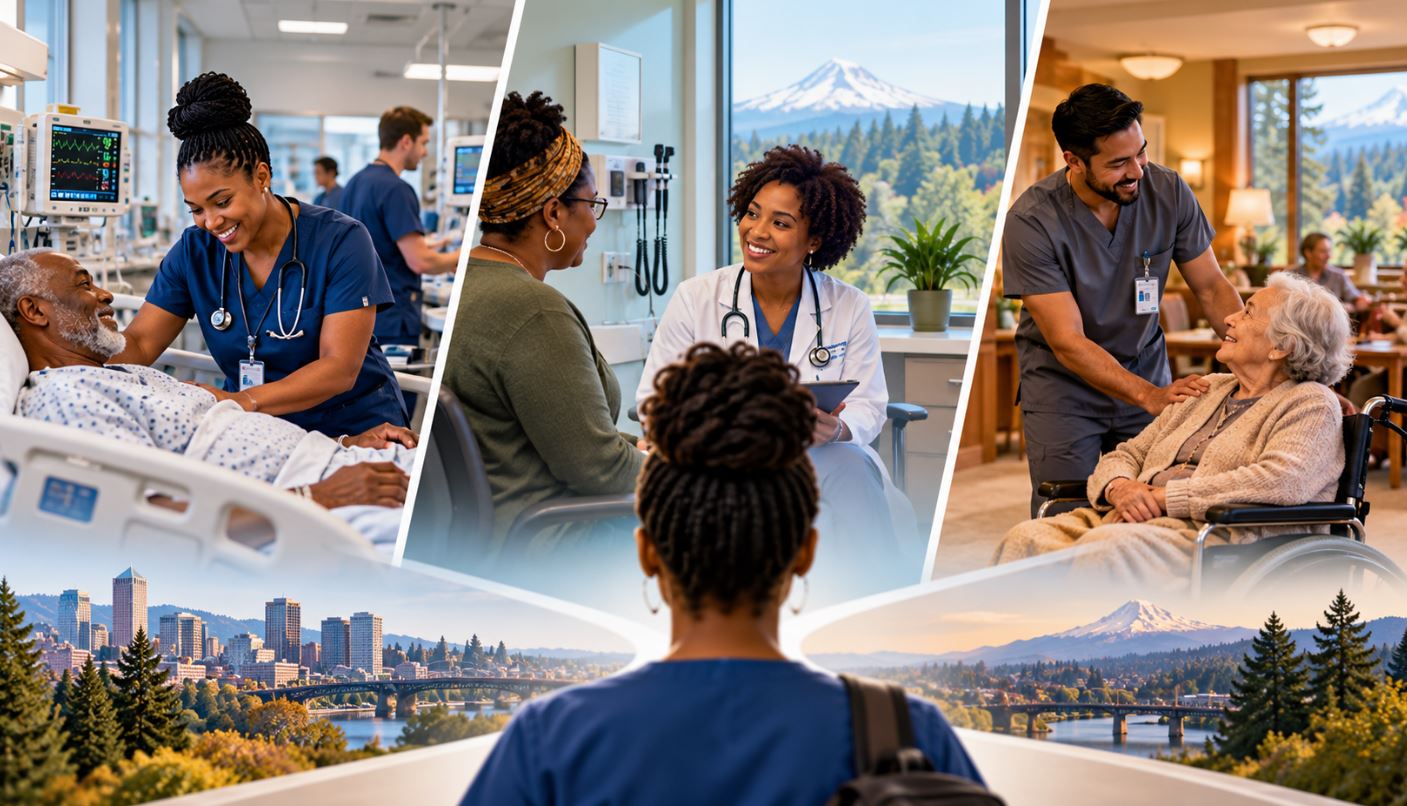
Choosing where to work as a nurse is one of the most important career decisions you can make. While hospitals, clinics, and nursing homes all provide essential healthcare services, they offer different responsibilities, schedules, challenges, and opportunities for professional growth.
For registered nurses (RNs), licensed practical nurses (LPNs), and other healthcare professionals in Oregon, finding the right nursing environment involves more than comparing salaries. It means understanding where your skills, personality, and career goals fit best.
Whether you’re beginning your nursing career in Portland or considering a change elsewhere in Oregon, this guide explores the key differences to help you make an informed decision.
Understanding Oregon’s Nursing Employment Landscape
Oregon’s healthcare industry continues to create opportunities for qualified professionals.
According to the Oregon Employment Department, private healthcare and social assistance employment is projected to grow 13% between 2024 and 2034, adding approximately 40,400 jobs statewide.
Within that sector, ambulatory healthcare services and nursing and residential care facilities are each projected to experience 17% employment growth over the same period.
National figures also reveal how nursing opportunities are distributed across healthcare settings.
The U.S. Bureau of Labor Statistics (BLS) reports that, in 2025:
- 59% of registered nurses worked in hospitals.
- 19% worked in ambulatory healthcare services, a category that includes clinics, physician offices, outpatient centers, and home healthcare.
- 6% worked in nursing and residential care facilities.
These figures highlight the variety of nursing career paths available. However, the best environment depends on what you want from your daily work.
1. Working in a Hospital: For Nurses Who Thrive in Dynamic Environments
Hospitals provide care for patients experiencing acute illnesses, injuries, surgical procedures, and complex medical conditions.
Depending on their qualifications and assigned departments, hospital nurses may work in emergency departments, intensive care units, medical-surgical units, operating rooms, or specialized treatment areas.
What Does Hospital Nursing Involve?
Hospital nursing typically requires continuous patient assessment, medication administration, clinical documentation, and close collaboration with physicians and other healthcare professionals.
Patient conditions can change rapidly, making critical thinking, communication, and clinical judgment essential.
Advantages of Hospital Nursing
Clinical development: Hospitals expose nurses to diverse medical conditions, specialized equipment, and opportunities to develop advanced clinical skills.
Career advancement: Depending on the employer, nurses may pursue specialty certifications, leadership roles, or further professional education.
Collaborative care: Hospital nurses frequently work alongside multidisciplinary teams, creating opportunities for shared learning and coordinated patient care.
Potential Challenges
Hospital nursing can be physically and emotionally demanding. Many departments operate around the clock, requiring evening, overnight, weekend, and holiday shifts.
High patient acuity and unpredictable emergencies may also increase workplace pressure.
In Oregon, hospitals are subject to specific nurse staffing requirements under House Bill 2697 and related regulations. Nurses considering hospital positions should review department-specific staffing arrangements and available clinical support.
Best suited for: Nurses who enjoy active clinical environments, solving complex problems, and developing specialized skills.
2. Working in a Clinic: For Nurses Who Value Preventive Care and Patient Education
Clinics generally focus on outpatient healthcare, including routine examinations, preventive services, chronic disease management, and follow-up appointments.
In Oregon, nursing professionals may find opportunities in primary care practices, specialty clinics, community health centers, and outpatient treatment facilities.
What Does Clinic Nursing Involve?
Responsibilities vary by facility but may include patient assessments, triage, vaccinations, medication administration, treatment assistance, health education, and coordination of follow-up care.
Clinical teams may include RNs, LPNs, medical assistants, physicians, and advanced practice providers.
Unlike inpatient hospital care, many clinic appointments are scheduled in advance, allowing healthcare professionals to focus on ongoing treatment plans and preventive services.
Advantages of Clinic Nursing
More predictable schedules: Many clinics operate primarily during regular business hours, although urgent care and certain specialty clinics offer evening or weekend services.
Patient education: Nurses have opportunities to help patients understand medications, manage chronic illnesses, and adopt healthier habits.
Continuity of care: Regular appointments can help nurses build professional relationships with patients and observe their progress over time.
Potential Challenges
Clinic nursing is not necessarily less demanding than hospital nursing.
Busy appointment schedules, telephone triage, electronic documentation, and coordination between providers can create significant workloads.
Some nurses may also miss the acute-care experiences and specialized procedures more commonly available in hospitals.
Best suited for: Nurses who enjoy organized workflows, patient education, preventive medicine, and outpatient care.
3. Working in a Nursing Home: For Nurses Passionate About Long-Term Care
Nursing homes and skilled nursing facilities provide care for individuals who require ongoing nursing supervision, rehabilitation, or assistance with daily activities.
Residents may be recovering from hospitalization or managing chronic illnesses, mobility limitations, and cognitive conditions.
This environment provides an opportunity to develop meaningful relationships with residents and their families.
What Does Nursing Home Nursing Involve?
Depending on professional qualifications and facility requirements, responsibilities may include medication management, wound care, monitoring changes in residents’ conditions, coordinating treatment plans, and supporting rehabilitation.
RNs, LPNs, and certified nursing assistants (CNAs) contribute different skills to long-term care teams.
According to the BLS, 37% of licensed practical and vocational nurses worked in nursing and residential care facilities in 2025, demonstrating the importance of these professionals in long-term care.
Advantages of Nursing Home Nursing
Meaningful relationships: Nurses often care for the same residents over extended periods, creating opportunities for trust and continuity.
Specialized experience: Long-term care develops skills in geriatric nursing, chronic disease management, rehabilitation, and resident-centered care.
Leadership opportunities: Experienced nurses may progress toward charge nurse, clinical coordination, or nursing management positions.
Potential Challenges
Long-term care requires patience, emotional resilience, and strong time-management skills.
Residents may have multiple medical conditions, and healthcare teams must balance clinical responsibilities with daily care needs.
Many facilities also operate 24 hours a day, requiring rotating shifts or weekend coverage.
Best suited for: Nurses who value long-term relationships, geriatric care, and supporting individuals through ongoing health challenges.
Hospital vs. Clinic vs. Nursing Home: How Do Nursing Salaries Compare?
Compensation is important, but the highest-paying setting is not automatically the best career choice.
According to BLS national wage data for May 2025, median annual earnings for registered nurses differed by industry:
| Healthcare setting | National median RN annual wage |
|---|---|
| Hospitals | $100,220 |
| Ambulatory healthcare services | $91,230 |
| Nursing and residential care facilities | $84,300 |
Source: U.S. Bureau of Labor Statistics — Registered Nurses.
These are national industry medians, not Oregon-specific salary estimates. The ambulatory category includes settings beyond clinics, while nursing and residential care includes more than nursing homes.
Actual earnings in Portland and other Oregon communities depend on qualifications, experience, specialty, employer, shift differentials, and employment arrangements.
Nurses should also consider healthcare benefits, retirement contributions, professional development, and scheduling flexibility when comparing offers.
How to Choose the Right Nursing Environment in Oregon
Before accepting a nursing position, consider these five questions:
- What type of patient care motivates you? Hospitals emphasize acute and complex care, clinics often focus on outpatient treatment, and nursing homes support long-term health needs.
- What schedule fits your lifestyle? Consider shift lengths, weekend commitments, overnight work, and opportunities for flexibility.
- Where do you want your career to go? Look for environments that support your preferred clinical specialties, professional development, and leadership ambitions.
- What level of workplace support is available? Ask about orientation, staffing, supervision, patient assignments, and access to experienced colleagues.
- What matters most beyond salary? Evaluate your wellbeing, commuting distance, work environment, and opportunities for meaningful patient interaction.
No healthcare setting is universally better than another. An environment that suits an experienced critical care nurse may not be ideal for someone passionate about community health or geriatric care.
Frequently Asked Questions
Is hospital nursing better than clinic nursing?
Neither is inherently better. Hospital nursing may offer greater exposure to acute medical conditions and specialized procedures, while clinic nursing often emphasizes outpatient treatment, health education, and ongoing patient management.
The better choice depends on your interests, qualifications, and preferred working conditions.
Can newly licensed nurses work in nursing homes?
Yes. Some nursing homes hire newly licensed nurses, although eligibility, supervision, orientation, and experience requirements vary by employer and position.
New nurses should seek facilities offering appropriate clinical support and structured onboarding.
Can nurses change healthcare settings during their careers?
Absolutely. Many nurses transition between hospitals, clinics, long-term care facilities, and other healthcare environments.
Additional training, certifications, or relevant experience may be necessary when moving into specialized roles.
Find Your Ideal Nursing Opportunity in Oregon With Dino Health Staffing
Your nursing career should reflect your professional goals, personal priorities, and commitment to quality patient care.
At Dino Health Staffing, we understand that finding the right healthcare position means more than simply filling an available shift.
As a nurse-led healthcare staffing agency with over 30 years of combined nursing and staffing experience, we connect qualified healthcare professionals with facilities in Portland and surrounding Oregon communities.
We support registered nurses, licensed practical nurses, certified nursing assistants, certified medical assistants, and caregivers through staffing solutions that include per diem, contract, and permanent placements.
Whether you’re interested in hospital nursing, outpatient care, or long-term care, our goal is to help you explore opportunities that match your experience, skills, and professional aspirations.
Ready to take the next step in your healthcare career?
Join Dino Health Staffing and explore career opportunities in Oregon.
Your skills matter. Your career goals matter. Find a healthcare environment where you can make a meaningful difference.