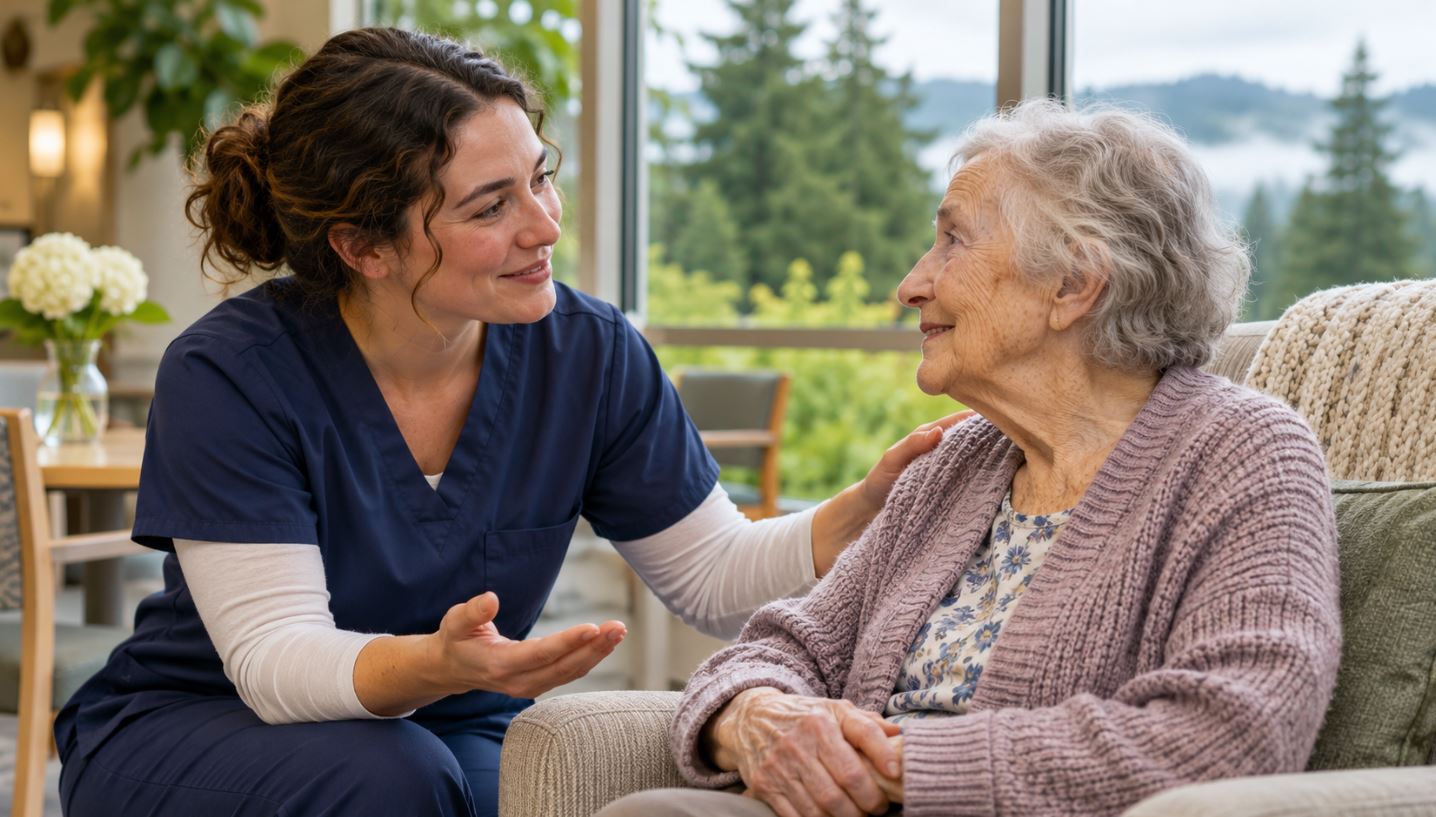
Caring for patients with dementia requires more than clinical knowledge. It demands patience, empathy, adaptability, and the ability to communicate in ways that help individuals feel safe, understood, and respected.
For nurses, certified nursing assistants (CNAs), medical assistants, and caregivers working in Oregon’s hospitals, nursing homes, assisted living communities, and home healthcare settings, effective communication is an essential part of providing high-quality, person-centered care.
Dementia can affect memory, language, reasoning, and the ability to process information. A patient who struggles to answer a question, follow instructions, or express discomfort may need a different communication approach rather than repeated explanations.
Understanding these challenges can help healthcare professionals build trust, reduce distress, and create more positive care experiences.
Why Effective Dementia Communication Matters in Oregon
Dementia is a significant and growing healthcare concern across the United States.
According to the Alzheimer’s Association’s 2026 Facts and Figures report, approximately 7.4 million Americans aged 65 and older are living with Alzheimer’s dementia, representing about one in nine people in that age group.
In Oregon, the Alzheimer’s Association’s 2026 state fact sheet reports:
- 79,100 Oregonians aged 65 and older were estimated to be living with Alzheimer’s in 2020, the reference year for the state’s prevalence estimate.
- 188,000 unpaid caregivers provide support to people living with dementia in Oregon.
- 291 million hours of unpaid dementia care are provided by Oregon caregivers, according to the report.
These figures highlight the importance of preparing healthcare professionals to meet the needs of people experiencing cognitive decline.
For healthcare facilities throughout Portland and surrounding Oregon communities, dementia-sensitive communication supports compassionate care, stronger relationships, and more effective collaboration between patients, families, and care teams.
1. Begin Every Interaction With a Calm Introduction
Patients with dementia may not consistently recognize familiar faces or remember previous conversations.
Healthcare workers should approach patients from the front, introduce themselves, and explain their purpose before beginning care.
For example:
“Good morning, Mary. I’m Sarah, your nurse today. I’m here to help you get ready for breakfast.”
Speak calmly, maintain comfortable eye contact, and allow the patient time to acknowledge your presence.
Even when caring for someone regularly, repeating a friendly introduction can provide reassurance and make interactions feel more predictable.
2. Use Simple, Respectful Language
One of the most important dementia communication tips for healthcare workers is to simplify information without speaking to patients as though they are children.
The National Institute on Aging recommends addressing patients directly, presenting one idea at a time, and allowing additional time for understanding.
Healthcare professionals can apply these principles by using short, clear sentences and explaining tasks individually.
Instead of giving several instructions at once, say:
“Please sit here.”
Allow the patient to respond before continuing:
“Now, let’s put on your shoes.”
Avoid unnecessary medical terminology, rushed explanations, and speaking louder when the difficulty involves comprehension rather than hearing.
3. Ask Questions That Are Easier to Answer
Open-ended questions can be overwhelming for some patients with dementia.
Rather than asking, “What would you like to wear today?” offer two manageable choices:
“Would you prefer the blue shirt or the green one?”
Similarly, instead of asking a patient to describe everything they need, begin with a straightforward question that can be answered with yes or no.
Avoid repeatedly testing memory with questions such as “Don’t you remember me?”
The goal is to encourage participation and preserve independence while adjusting communication to the person’s abilities.
4. Pay Attention to Nonverbal Communication
Communication involves more than spoken words.
Facial expressions, posture, gestures, and tone of voice can communicate reassurance or discomfort even when verbal communication becomes difficult.
Healthcare professionals should pay attention to whether a patient appears relaxed, frightened, confused, or uncomfortable.
Helpful approaches include demonstrating simple actions, using appropriate gestures, and positioning yourself at the patient’s eye level.
Before physical contact, explain what you intend to do and respect the patient’s response.
Also consider hearing loss, vision difficulties, and language preferences. These factors may create additional communication barriers unrelated to dementia itself.
5. Respond to Emotions Instead of Arguing About Facts
Patients with dementia may express beliefs or concerns that do not match their current surroundings.
For example, a nursing home resident might repeatedly ask to go home.
Responding with “You live here now. I’ve already told you” may increase distress.
A more supportive response could be:
“You seem worried about home. Tell me what you’re missing.”
This acknowledges the patient’s emotional experience without creating unnecessary confrontation.
The Alzheimer’s Association recommends listening patiently, offering reassurance, and avoiding criticism or arguments.
Healthcare workers should focus on understanding the concern while following appropriate safety, consent, and clinical procedures.
6. Make Personal Care Predictable and Reassuring
Daily activities such as bathing, dressing, eating, and transferring between surfaces can become stressful when patients do not understand what is happening.
Before providing assistance, explain the next step clearly.
For example:
“I’m going to help you stand so we can move safely to your chair.”
Pause for acknowledgment, offer assistance according to the care plan, and avoid rushing.
Maintaining familiar routines and respecting personal preferences can make care activities less overwhelming.
When possible, encourage patients to participate in tasks they can still perform independently.
Preserving dignity should remain central to every interaction.
7. Recognize When Behavior May Signal an Unmet Need
A patient who becomes agitated, withdrawn, or resistant to care may be experiencing discomfort that they cannot clearly communicate.
Possible contributing factors include pain, hunger, dehydration, fatigue, constipation, unfamiliar surroundings, or infection.
Rather than automatically interpreting behavior as a symptom of dementia, healthcare workers should assess the situation within their professional responsibilities.
The National Institute on Aging advises that sudden worsening or changes in a person’s condition may indicate delirium associated with medical problems such as infection, dehydration, or medication effects.
Sudden confusion or a significant change from a patient’s normal behavior requires prompt clinical attention.
CNAs and caregivers should report concerning changes to the responsible nurse or clinician according to facility protocols.
8. Adapt Communication as Dementia Progresses
Communication needs can change as dementia advances. Healthcare professionals should adapt their approach to each patient’s current abilities rather than relying exclusively on the diagnosis or disease stage.
Early-Stage Dementia
Patients may still communicate independently but occasionally struggle to remember words or organize their thoughts.
Allow time for conversation, involve patients in decisions, and avoid unnecessary interruptions.
Middle-Stage Dementia
Patients may need simpler instructions, fewer distractions, and additional reassurance.
Use familiar words, offer limited choices, and maintain consistent routines whenever possible.
Advanced Dementia
Verbal communication may become limited.
Healthcare professionals may need to rely more heavily on facial expressions, gestures, familiar sounds, and careful observation of physical responses.
Regardless of disease progression, patients deserve respectful communication and meaningful involvement in their care to the extent possible.
9. Share Communication Preferences Across Healthcare Teams
Consistent communication is especially important when multiple healthcare professionals provide care across different shifts.
A patient may respond positively to a particular greeting, familiar routine, or explanation style.
Documenting relevant preferences in the care plan and communicating them during shift handovers can help colleagues provide more coordinated support.
Useful information may include preferred names, communication barriers, helpful routines, known distress triggers, and strategies that have previously worked.
Family members and authorized care partners can also offer valuable insight into the patient’s history and preferences.
All information sharing should follow organizational policies and patient confidentiality requirements.
Strengthening Dementia Care in Oregon Healthcare Facilities
Providing compassionate dementia care requires individual skills and organizational support.
Healthcare administrators should prioritize appropriate orientation, continuing education, and access to communication resources for employees who support patients with cognitive impairment.
The Oregon Department of Human Services provides dementia training resources covering person-centered support, communication, and behavioral expression.
Additionally, the Oregon Health Authority emphasizes the importance of recognizing patients’ language and disability-related communication needs and arranging appropriate support.
For hospitals, skilled nursing facilities, assisted living communities, and home healthcare organizations, these principles should be reinforced through staff education, effective handovers, and individualized care planning.
Reliable staffing also matters. Healthcare teams need adequate support and clear responsibilities to communicate patiently while meeting clinical demands.
Supporting Compassionate Healthcare Staffing With Dino Health
At Dino Health Staffing, we believe excellent healthcare begins with compassionate, capable professionals who understand the importance of treating every patient with dignity.
We connect qualified registered nurses (RNs), licensed practical nurses (LPNs), certified medical assistants (CMAs), certified nursing assistants (CNAs), and caregivers with healthcare facilities in Portland and surrounding Oregon communities.
Through flexible per diem, contract, and permanent staffing solutions, Dino Health helps healthcare organizations address workforce needs while supporting professionals seeking meaningful career opportunities.
Whether caring for individuals with dementia or supporting patients with other complex healthcare needs, effective communication remains fundamental to quality care.
Healthcare facilities: Request qualified healthcare staff to support your workforce needs.
Healthcare professionals: Explore opportunities and join Dino Health to pursue rewarding roles in Oregon healthcare.
Final Thoughts
Caring for patients with dementia is not simply about finding the right words. It is about creating an environment where patients feel heard, respected, and secure.
Small actions, such as speaking calmly, allowing additional response time, acknowledging emotions, and maintaining familiar routines, can make everyday care more comfortable and meaningful.
For healthcare professionals across Oregon, developing strong dementia communication skills is an investment in patient dignity, safer care, and stronger relationships.
Because compassionate care begins with understanding—and every patient deserves to be treated as a person first.
Dino Health is dedicated to connecting healthcare professionals with top-tier job opportunities while ensuring healthcare facilities find the best talent. We are committed to enhancing the healthcare industry by prioritizing work-life balance, career growth, and professional well-being. Through expert insights, industry news, and career resources, we empower nurses, doctors, and allied health professionals to thrive in their careers. Connect with Us on Facebook